Cavities
Cavities are the most common, yet preventable disease worldwide. While good hygiene practices like brushing and flossing help to maintain oral health, there is more to the story than meets the eye. What are cavities, why do they emerge, what do they tell us about the health of our body, and how do we heal & prevent them?
What is a Cavity?
The World Health Organization (WHO) highlights dental caries as the most common, yet preventable chronic disease on the planet, with oral diseases affecting nearly 3.7 billion people, and constituting a major global health challenge. Around the globe, 60-90% of children, and nearly 100% of adults have tooth decay.
Cavities form through a process called demineralization, whereby minerals are removed from the tooth. This process can happen in two different ways:
(1) When bacteria and plaque sit on the teeth and feed on their favourite fuels, they make acid that dissolves the minerals.
(2) When your body needs minerals because of ongoing immune stress, or lack of essential mineral intake through food, it takes them from the teeth.
Over time, as mineral loss continues, a microscopic hole in the tooth is created. This hole is a big enough home for bacteria to crawl into with a few of their friends, creating a colony of bacteria. Together, they create more acid and dissolve more minerals. The tooth weakens as demineralization continues, which is why it’s so important to focus on preventive care to keep your teeth strong and healthy.
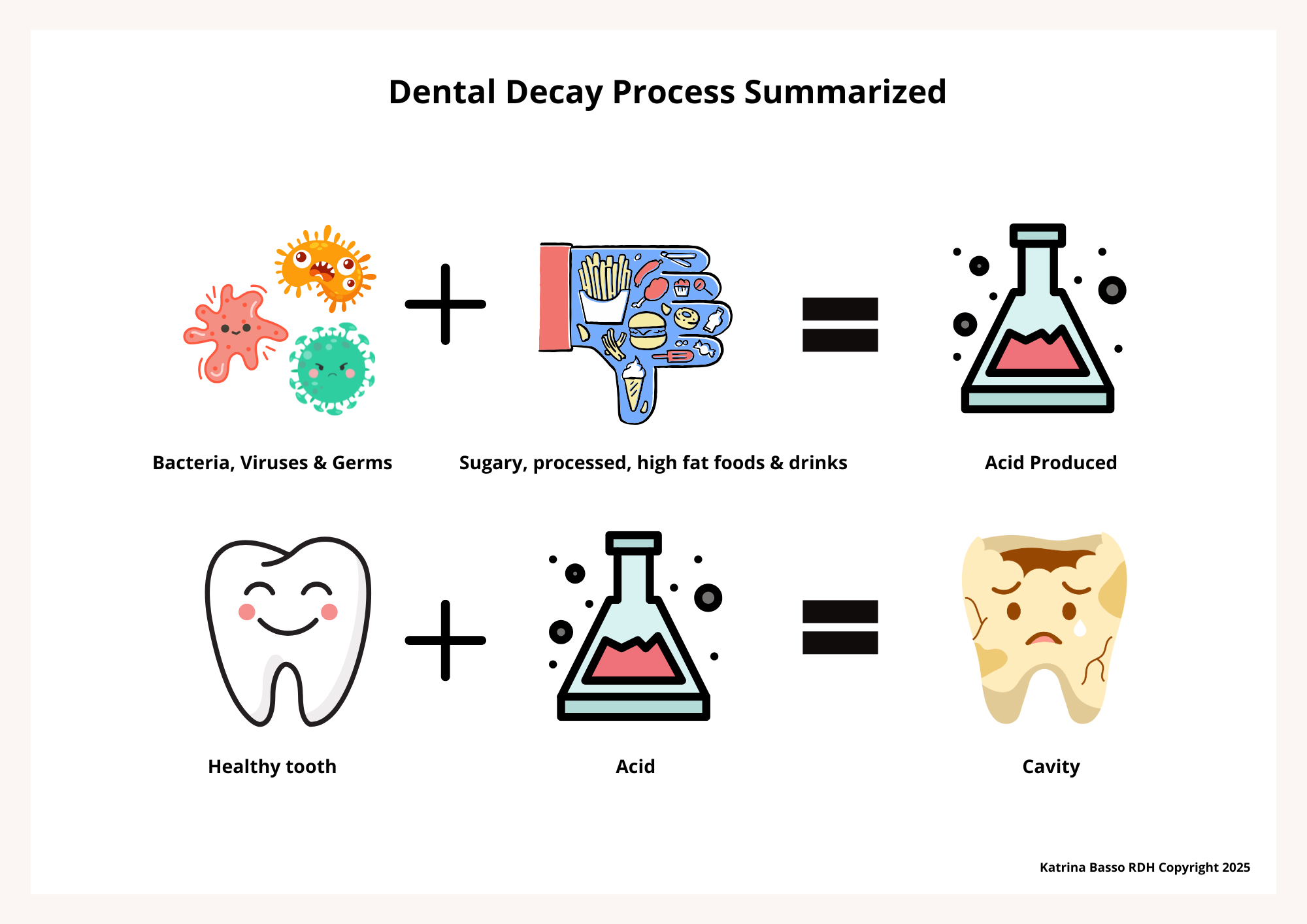
Cavities can be classified as active or arrested. An active cavity means it is growing or getting worse and the tooth is still being damaged by the demineralization process. An arrested cavity means that the cavity that was once growing has stopped and is no longer progressing. A cavity is healed by lowering the pathogenic load (getting rid of viruses & bacteria) and adding minerals, while limiting or avoiding health troublemakers whenever possible!
How Does Demineralization Happen?
Several factors are involved in demineralization of the teeth and bones, including:
Consuming processed & sugary foods
Consuming acidic beverages such as coffee & kombucha
Vinegar consumption, like apple cider vinegar and pickles
Ammonia permeability, whereby acids from the stomach rise and affect oral health
High acidity in the body due to pathogenic loads
Nutritional deficiencies such as lack of bioavailable calcium, magnesium, zinc and critical minerals
Chronic immune stress & inflammation from pathogens, toxic heavy metals, emotional & environment stressors
The impact of pharmaceuticals and medications
Low Hydrochloric acid (HCL)
Structural Issues like mouth breathing & OMDs
Teeth grinding
Poor oral hygiene habits
Poor dietary choices
The Role of Saliva
Saliva is crucial for dental health. It buffers and neutralizes acids produced by plaque bacteria, and clears away food particles, limiting their contact with the teeth. Saliva remineralizes the enamel, depositing minerals like calcium and phosphate directly into the teeth, helping reverse early demineralization and promote the repair of tooth enamel. This remineralization process is strengthened by a diet rich in healing foods. Saliva also forms a thin protective layer of proteins & lipids called the acquired enamel pellicle (AEP), on the tooth surface that protects against acids and other harmful agents. Saliva’s antibacterial can inhibit bacterial growth, prevent cavity causing bacteria from establishing, and control the oral microbiome. Oral habits such as mouth breathing can increase cavity risk, as it dries out the mouth, increasing susceptibility to bacteria and hindering remineralization, highlighting the importance of nasal breathing and moisture in saliva's protective role.
What is Remineralization?
Remineralization is the process of rebuilding and strengthening the tooth by adding minerals, reversing the damage caused by demineralization. Remineralization happens through (1) the consumption of remineralizing, nutrient-dense foods such as leafy greens, fruits, vegetables and wild foods like pure maple syrup and honey along with (2) saliva’s key role in remineralizing the teeth, keeping the mouth moist, clean and healthy.
How Remineralization Works:
Mineral Deposition: Your body uses minerals from your saliva, diet, & water and deposits them into the tooth enamel.
Hydroxyapatite Formation: These minerals form hydroxyapatite, a compound that is a fundamental building block of your teeth, providing strength and repairing weakened areas.
Strengthening and Repair: Remineralization helps to restore lost minerals, strengthen the enamel's structure, fill microscopic voids and cracks, reverse early decay and make teeth more resistant to future acid attacks, helping to prevent cavities.
When Can a Cavity Be Remineralized?
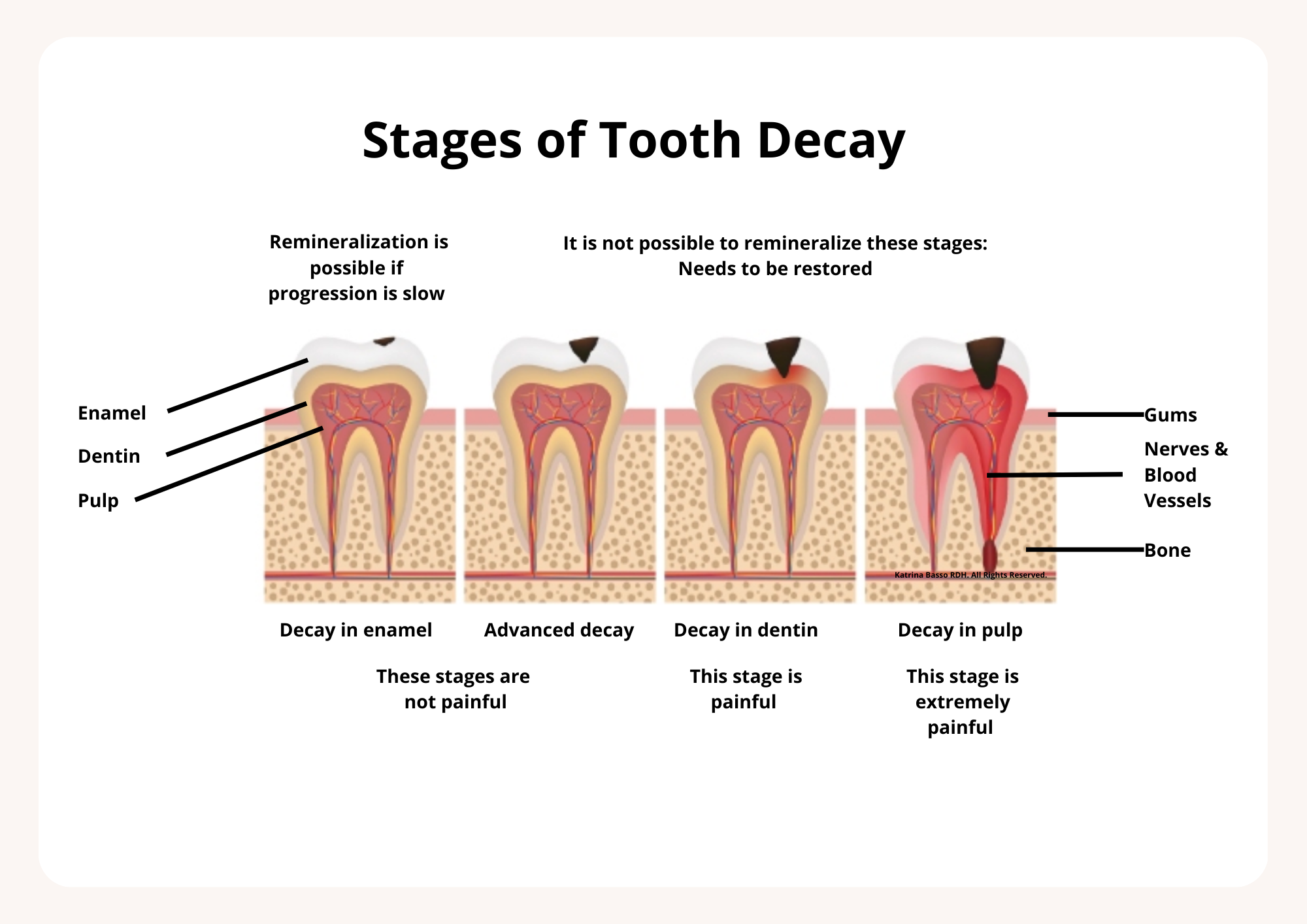
Small cavities that penetrate only the enamel, the outer layer of the tooth, are easier to remineralize compared to those that penetrate deeper into the dentin, the layer under the enamel. As cavities grow larger, there is a greater loss of minerals, making it more difficult to repair. We don’t have any tooth construction workers that can put up scaffolding and rebuild the mineral structures of teeth if large amounts of minerals have already been lost, so it is extremely important that we utilize home care habits and strategies to prevent the emergence of cavities from the get-go.
Easier to Remineralize: Cavities located on smooth surfaces, such as the cheek and tongue sides of the tooth & small cavities that have not progressed significantly.
More Challenging: Cavities found on the biting surface or within deep grooves of teeth & cavities between teeth.
Structural Changes: Factors such as grinding, chipped or broken teeth can also influence the ability to remineralize a cavity.
A Quick Guide to Cavity Assessment
Here’s a simple guide to assess cavities:
Rapidly progressing cavity – Needs to be restored.
Slowly progressing cavity – Needs to be restored.
Very slowly progressing cavity – Can be remineralized
The Remineralization Process
The process of remineralizing the teeth is quite simple if we allow it to be, and is a life-long process that unfolds through our daily habits, tools and health protocols, rather than a quick fix. Focusing on foundational tools is most helpful, and below you will find main methods for remineralization:
Nutrition: Emphasize foods such as leafy greens, green juices, and healing drinks like lemon water, celery juice, coconut water, parsley juice, spirulina, and wheatgrass juice. Parsley can used more therapeutically in a concentrated shot, too. Silica-rich foods, pure maple syrup, honey, and an abundance of citrus fruits provide high levels of minerals, vitamin C and calcium necessary for strong healthy bones & teeth. Dates are a fantastic ally for remineralizing the body.
Products: Utilize dental toothpaste and tinctures enriched with minerals such as Living Libations toothpastes and ozoneated oral gels, along with hydroxyapatite-based toothpaste to help remineralize and strengthen your teeth.
Homeopathy: Consider cell salts like Calcarea Phosphorica and Calcarea Fluorica.
Treatments: Explore ozone therapy and herbal teas such as horsetail and nettle (as tea or tincture).
While nutrition is crucial for remineralizing teeth, incorporating these products and holistic topical treatments can add significant benefit.
Key Nutrition For Remineralization
Proper nutrition plays a vital role in remineralizing your teeth. Certain foods are particularly effective at supporting this process by providing the minerals and nutrients your teeth need to stay strong. Here are some key nutritional components:
Silica-rich foods: Silica is essential for strengthening enamel and supporting overall tooth health. Foods like asparagus, cucumbers, aloe, grapes and cherries are rich in silica and should be incorporated regularly.
Leafy greens: High in calcium and other important minerals, leafy greens like spinach, kale, and collard greens are crucial for remineralizing teeth and improving overall dental health.
Green juices and smoothies: Celery juice, parsley juice, and green juices made from leafy greens, cucumbers, celery, apples and pears help supply the body with the necessary nutrients to support teeth remineralization. Incorporating these into your diet offer mineralizing support.
Spirulina and wheatgrass: These nutrient-dense foods can be added to your smoothies and drinks to help restore minerals to the body and support tooth repair.
Barley grass juice powder: A great source of calcium, vitamins and minerals, barley grass helps fight tooth decay and supports enamel remineralization.
Fresh made orange juice: Oranges and citrus fruit contain some of the highest amounts of bioavailable calcium and vitamin C, critical components of bone strength and immune support.
Products to Support Remineralization
Hydroxyapatite, the primary mineral in enamel, is crucial for remineralization, sealing, and smoothing the enamel surface. Using hydroxyapatite-based toothpaste regularly can help rebuild enamel and prevent tooth decay for both adults and children.
Swishing Minerals: Remineralization liquids strengthen enamel by providing trace minerals and maintaining an alkaline (neutral) mouth pH. Options include swishing with fresh celery juice and using Living Libations or Uncle Harry’s remineralization products.

Is Your Tooth Enamel Weakening?
Chipped, cracking, translucent, or easily stained teeth, along with increased tooth sensitivity often signal weakened enamel. Thin, compromised enamel may exhibit a greyish, transparent appearance at the edges, and be prone to chipping or cracking. Weakened enamel allows pigments from foods such as wild blueberries, wine, or coffee to penetrate deeper, leading to persistent stains. Exposure of dentin (the inside, yellow layer of the tooth) due to weak enamel can increase sensitivity, as can sensitive nerves from bacterial and viral inflammation.
While it was once deemed a dental myth that teeth can regrow, science is slowly catching up, validating the fact that teeth are living organs with the ability to repair, much like other bones. As Anthony William states, “oranges help to regrow teeth,” emphasizing the body's remarkable regenerative capabilities, further highlighting the fact that teeth are living structures, intricately linked to the health of our internal environment. Vitamin C and calcium play a crucial role in supporting gum health, collagen production, and enamel repair, while silica-rich foods like grapes, aloe vera gel, artichokes and asparagus help strengthen and support the teeth and bones.
Enhancing enamel through proper nutrition, saliva support, and holistic treatments—nutrient & mineral dense foods, green drinks and smoothies, along with hydroxyapatite toothpastes—can not only repair damage but also provide protection against symptoms of weakening teeth like chipping, translucency, and staining. Our internal environment is truly reflected in our oral health and the habits and routines we keep that uphold our highest health potential.
