The Lymphatic System
What is the lymphatic system?
The lymphatic system is a network of organs, vessels and tissues that run throughout the body, working together to move a watery fluid (called lymph) back into the blood stream.
The lymphatic system is a vital part of the immune system, protecting against invaders that cause illness (like viruses & bacteria) and destroying old or abnormal cells your body doesn’t need. The lymphatic system also maintains normal fluid levels in your body and absorbs fats in the digestive tract so they can make their way into your bloodstream.
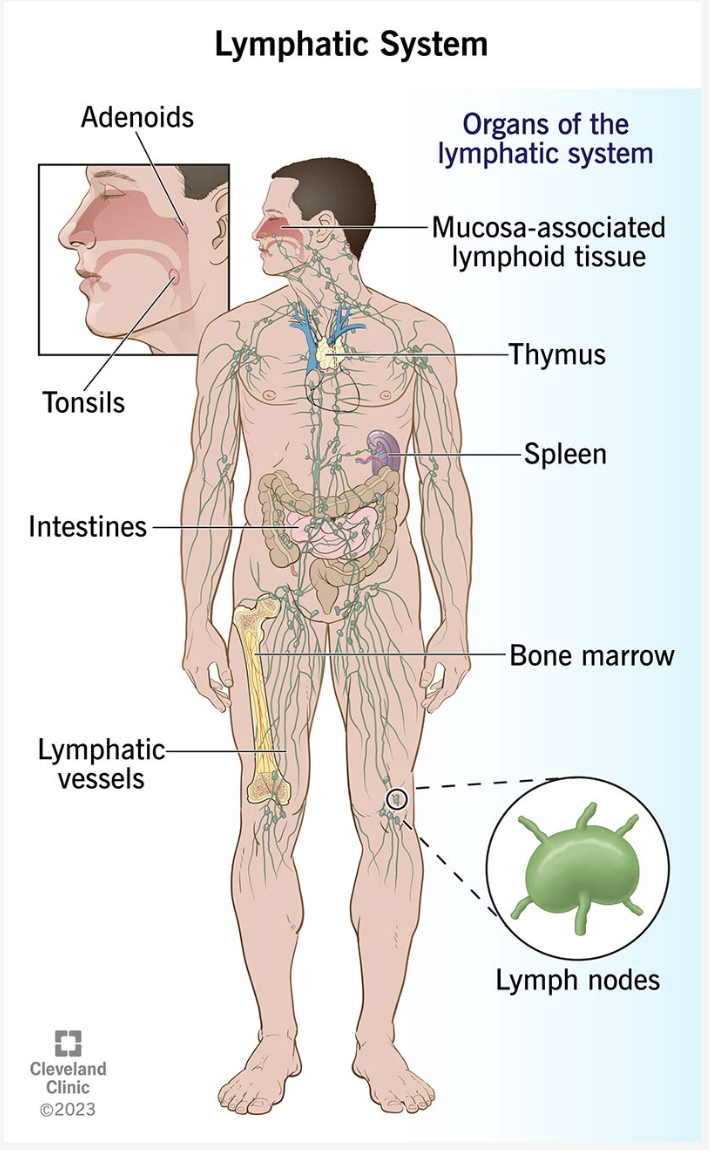
The lymphatic system includes:
Bone marrow: a soft, spongy tissue rich in blood vessels that fill the space of most bones. It includes one type of marrow that is red and is responsible for producing red blood cells and white blood cells and another type that is yellow and contains fat, making platelets
Tonsils: are small, round pieces of tissue located in the back of the throat on both sides that help fight infections, and can alert us to lymphatic system troubles early
Adenoids: are a clump of tissue that help fight infection, located behind the nasal cavity above the roof of the mouth
Mucosa-associated lymphoid tissue (MALT): a mucus membrane that exists throughout the body in very important places. It lines your tonsils, airways, small intestine and appendix and its job is to look for and destroy germs that could harm you
Spleen: is the largest lymphatic organ located on your left side under your ribs and above the stomach. It filters the blood, eliminating worn-out red blood cells and producing some white blood cells
Thymus: is located in the upper chest, beneath the breastbone. It’s a glandular structure that is most active before puberty, and it’s where T-cells, a type of white blood cell mature. These T-cells helps fight off invaders
Lymph: a clear, colourless liquid (similar to blood without the red blood cells) that nourish the tissues and carry off waste
Lymph nodes: are bean shaped glands of tissue in the body through which lymph passes to be filtered. There are about 600 lymph nodes scattered around the body, with approximately 1/3 of them found in the head and neck
Lymphatic vessels: thin tubes that form networks, carrying lymphatic fluid and white blood cells through the lymphatic system. These vessels contain valves that keeps the lymph flowing in the right direction
Collecting ducts: two ducts in your upper chest (called the right lymphatic duct and thoracic duct) that drain lymph fluid, acting like merging points where lymph rejoins the bloodstream
Peyer’s patches: clusters of lymphatic tissue located in the mucus membrane that lines your small intestine lining (ileum). It acts as an immune sensor for the gut
Appendix: narrow, finger-shaped pouch that helps protect good bacteria in the gut and is attached to the large intestine
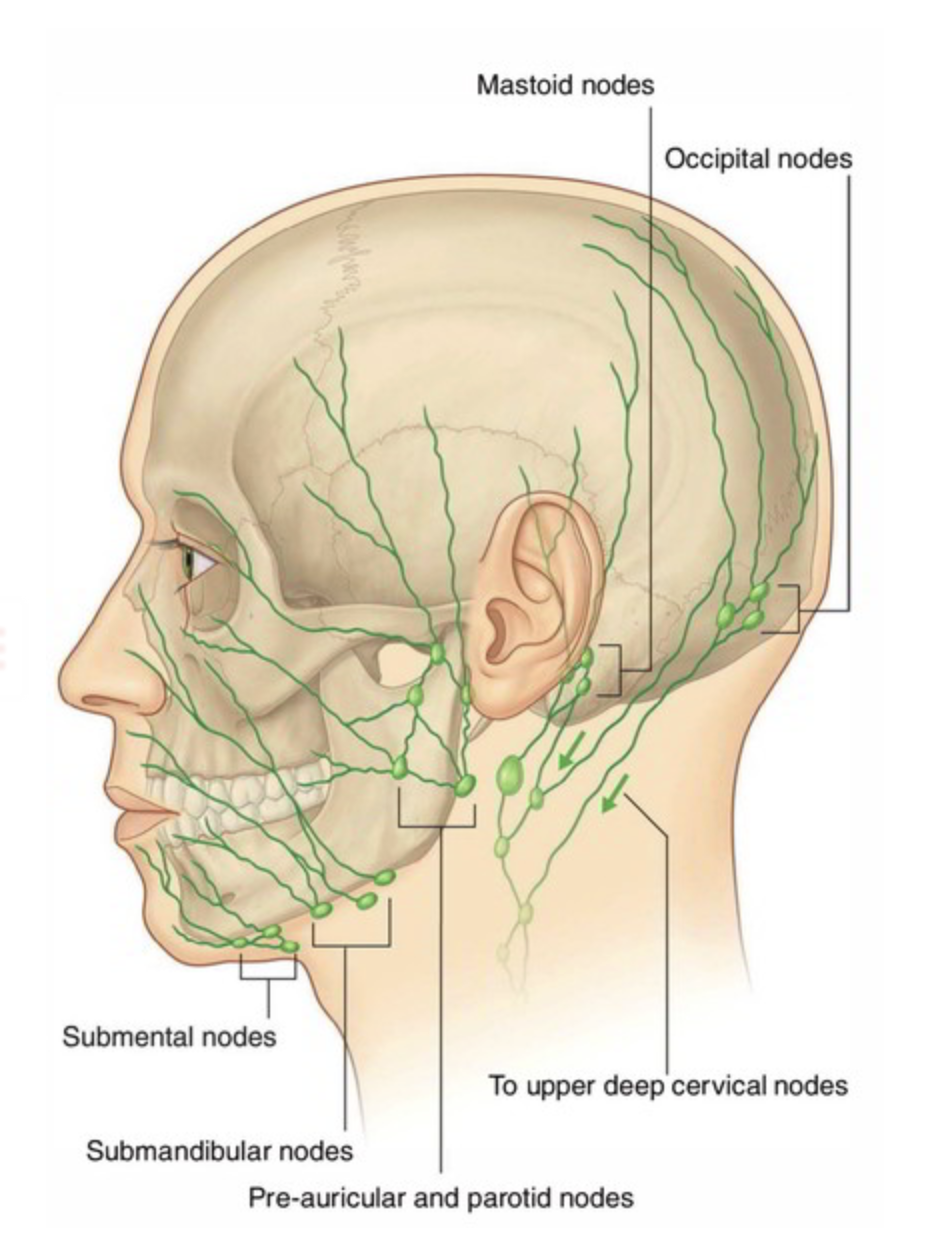
The Lymphatic System & the Head, Neck & Salivary Glands
While salivary glands are not part of the lymphatic system, they are organs of the digestive system that produce saliva. The parotid salivary gland contains numerous lymph nodes within it, and lymphatic vessels from the salivary glands drain into nearby groups of lymph nodes, making the two systems intimately connected.
Through extra-oral and intra-oral dental hygiene assessments, the lymphatic system is palpated, looking for any signs of inflammation, swelling or swollen nodes, including the tonsils inside of the mouth. Inflamed or palpable nodes of the head and neck, or swollen, inflamed tonsils are signs of an overburdened lymphatic system. Often, we miss signs that the body is struggling until we are dealing with chronic symptoms. Paying attention to the mouth, face and neck gives vital clues to the overall health of the body, and can aid in prevention of oral -systemic disease.
The Lymphatic System & The Liver
These two go hand-in-hand when it comes to keeping us clean and healthy. Did you know that the liver produces 20-25% of the body’s lymph, and is drained by the lymphatic vessels? Due to viral loads, unproductive foods that people eat regularly, and environmental toxins & stressors, the liver can become overburdened, and it’s filtration system gets backed up. When this happens, toxins and poisons can leach into the lymphatic system, creating a backed-up, overburdened lymphatic system, too. When this happens, the job of lymphocytes (a type of white blood cell in the immune system that defend the body against infection, cancer, & other foreign substances) becomes even more difficult, because the lymph fluid becomes filled with sludge and waste, making it difficult for them to swim through.
Many of my patients today, of every age, struggle with oral and systemic issues that arise from a sluggish lymphatic system and burdened liver:
Enlarged, full lymph nodes in the head, neck & body
Enlarged tonsils and adenoids
Sinus issues such as chronic congestion and post nasal drip
Strep throat and mononucleosis
Bloating
Excess weight
Lymphedema & swelling
Constipation
Digestive issues
Move That Lymph!
It is crucial to keep lymph flowing and moving. Foods, herbs and movement can help with this, along with adjunctive therapies.
Foods: lemon water, celery juice, apples, garlic, ginger, turmeric, leafy greens, berries
Herbs: rosehips, dandelion roots/greens, burdock root, cleavers, echinacea, calendula, and red clover
Movement: rebounding, walking, massage, CST, dry brushing
Adjunctive Therapies: Through continuing education courses, I have had the opportunity to learn about and integrate techniques into practice that support the lymphatic system of the face, head and neck. Craniosacral Therapy (CST) is a gentle, hands-on approach that uses very light touch to examine membranes and the movement of fluids in and around the central nervous system, relieving pressure, promoting a feeling of wellness through the elimination of pain, and boosting immunity and health by tapping in to the body’s natural ability to heal itself. CST goes hand in hand with lymphatic drainage techniques, a distinct but complementary modality to orofacial myofunctional therapy.
Though these techniques are incredible, their focus is on anatomy and the techniques helpful in fixing and facilitating the flow & movement of lymph, without any focus on the root cause. How and why has the lymphatic system become so problematic for people of diverse ages to begin with?
While movement and flow of the lymphatic system is important, if the lymphatic system is a problem, the liver is a problem and it needs to be cleaned up in order to clean up any inflammation within the lymph.
To moving, grooving, clean livers & healthy tonsils,
